Skip to content

Sore shoulders after a hard training block. Legs that still feel heavy three days later. A nagging tendon that never fully settles down. Recovery becomes the limiting factor long before motivation does, which is why peptide therapy for muscle recovery keeps coming up in gyms, podcasts, and group chats around the Lowcountry.
At The Drip Lounge, we think a question this common deserves a real answer instead of a yes or a no. Here is what peptides are, what the science currently supports, and where medical oversight fits into the conversation.
Can peptide therapy help with muscle recovery?
Peptide therapy may support recovery goals for some adults, though the evidence is still early and most peptides discussed for muscle repair are not FDA-approved for that use. A medical consultation is the right starting point, since a provider reviews your health history before deciding if the service fits you.
What Peptide Therapy Actually Is
Peptides are short chains of amino acids, the same building blocks your body uses to make protein. Your body already produces hundreds of them and uses them to run everyday processes.
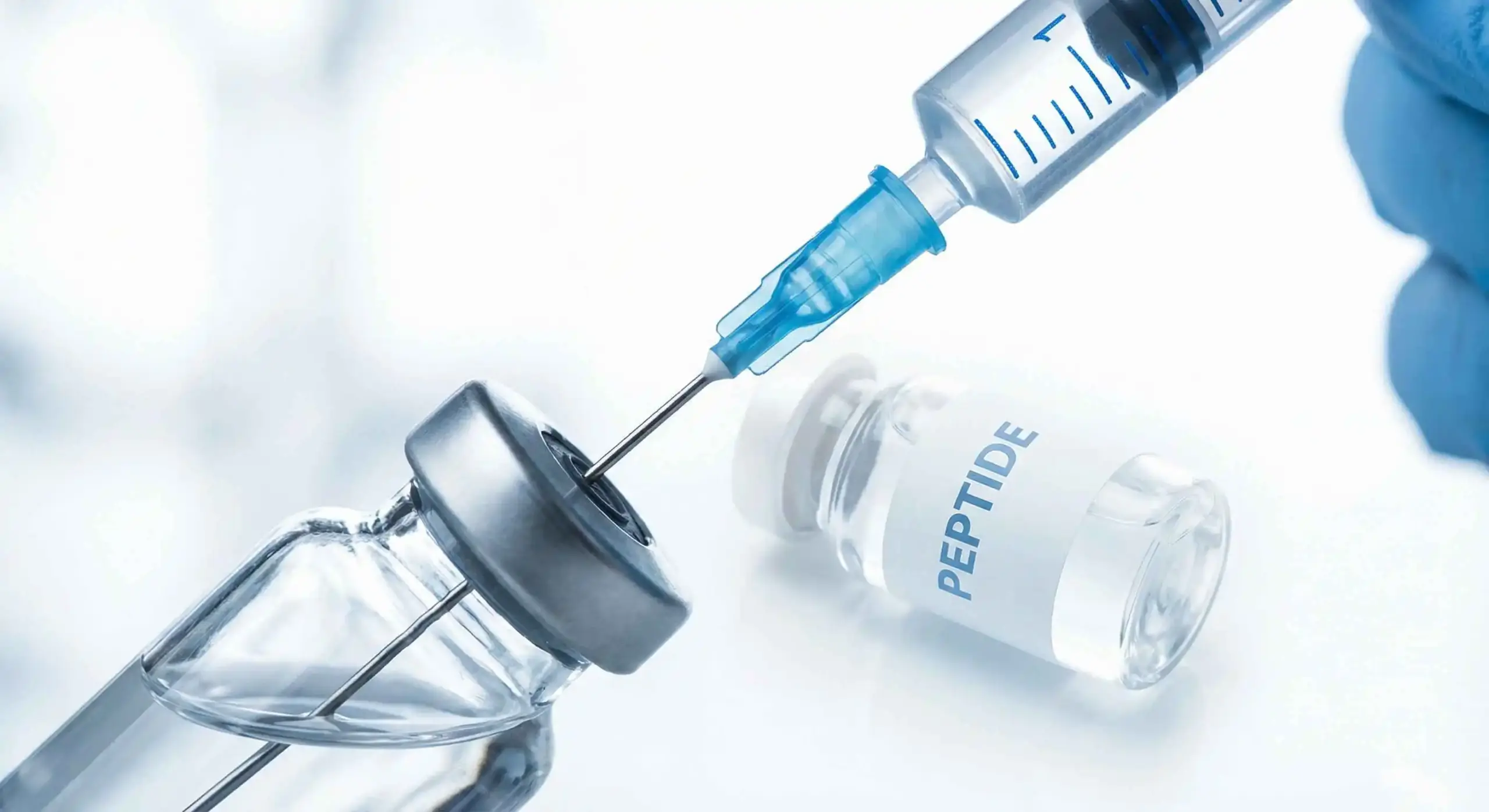
Peptide therapy is a wellness service built around an individualized plan created after a medical consultation. That sets it apart from the peptides in a protein shake or an over-the-counter supplement, which are digested like food. Clinical protocols involve specific compounds, specific administration, and provider oversight from the first appointment forward.
One honest frame before going further: peptide therapy for recovery is a supportive wellness service. It is not intended to diagnose, treat, cure, or prevent any disease.
How Peptides Are Involved in Muscle Repair and Recovery
Peptides act as signaling molecules, which is the biological reason peptides for muscle recovery became a research topic at all. Signaling means sending instructions. A peptide does not build tissue the way dietary protein does. It tells cells what to do next.
Muscle repair after hard training depends on three overlapping processes: the inflammation that starts the repair response, the protein synthesis that rebuilds damaged fibers, and the resolution phase that brings tissue back toward baseline. Peptides participate in all three as part of normal physiology.
A mechanism that exists in the body is not the same thing as a proven clinical outcome in a healthy adult. That distinction shapes everything below.
What Research Suggests About Peptides, Recovery, and Performance
Research on peptide therapy for performance is early, and most of it has been done in laboratory models or animals rather than in trained humans. Some findings on tissue repair markers look promising, which explains the interest. Studies in healthy, actively training adults remain limited.
That gap is worth sitting with. A study showing an effect in rodent tendon tissue tells you something about biology. It does not tell you what will happen to your hamstring after a heavy week.
Any source describing peptides for athletic recovery in terms of guaranteed timelines or specific performance gains has moved past what the current evidence supports.
Where FDA Approval Stands and What Off-Label Means
Most peptides discussed as a muscle recovery treatment are not FDA-approved for that use, and several are not approved for any human use. The regulatory situation shifted more than once during 2026 as the FDA reviewed which peptide substances may be used in pharmacy compounding, and parts of it remain unsettled.
Off-label describes an approved drug prescribed for a use outside its labeling, which is legal and routine when a physician judges it appropriate. A substance carrying no approval at all sits in a different category entirely, and that difference is not a technicality.
Sourcing follows from this. Peptides sold online under research use only labels carry genuine risk, including unknown purity and unknown contents.
Why Physician Supervision Is the Deciding Factor
Medical oversight decides if peptide therapy for athletes and active adults is appropriate at all. A consultation reviews your health history, current medications and supplements, training load, and what you are actually trying to change. Only after that does a provider discuss what, if anything, fits.
If a plan moves forward, your provider explains the approach, realistic expectations, potential side effects, and how progress gets monitored. Follow-up is part of the plan, not an add-on.
Our Team works consultation first for exactly this reason. Some people are not good candidates. Certain health histories, medications, and life stages make peptide therapy for muscle recovery in Charleston, SC inappropriate, and eligibility is confirmed in person.
What Peptide Therapy Cannot Replace
No protocol outperforms sleep. Consistent rest, adequate protein, progressive training, and real recovery days remain the foundation of workout recovery, and nothing offered inside a clinic changes that math.
Peptide therapy benefits are framed as complementary for this reason. The service is designed to sit alongside healthy habits rather than stand in for them.
For broader recovery support between training blocks, we also offer Normatec compression therapy, Sunlighten® infrared sauna therapy, IV infusion therapy, and NAD+ therapy. Each has its own purpose and its own appropriate use, and individual experiences vary across all of them.
Common Questions About Peptide Therapy and Muscle Recovery
Is peptide therapy the same as taking amino acid supplements?
No. Supplements are regulated as food and digested as nutrition. Peptide protocols are medical services involving specific compounds and provider oversight.
How soon might someone notice a difference?
Timelines vary considerably, and results are not guaranteed. Your provider reviews what is reasonable to expect based on your plan and your goals.
Is peptide therapy safe?
Safety depends on the individual, the compound, and the sourcing. Potential risks and side effects are reviewed during your consultation before anything begins.
Can it be combined with other wellness services?
In many cases, yes. Your provider confirms which combinations suit your health history.
Recovery Decisions Belong With a Provider, Not a Podcast
Peptide therapy may support muscle recovery and performance goals for some adults, though the evidence is still developing and most uses are not FDA-approved. An honest answer serves you better than a confident one.
Looking for personalized support for muscle recovery and performance? Schedule a consultation at The Drip Lounge in Charleston, SC, to learn if peptide therapy may be right for your wellness goals.